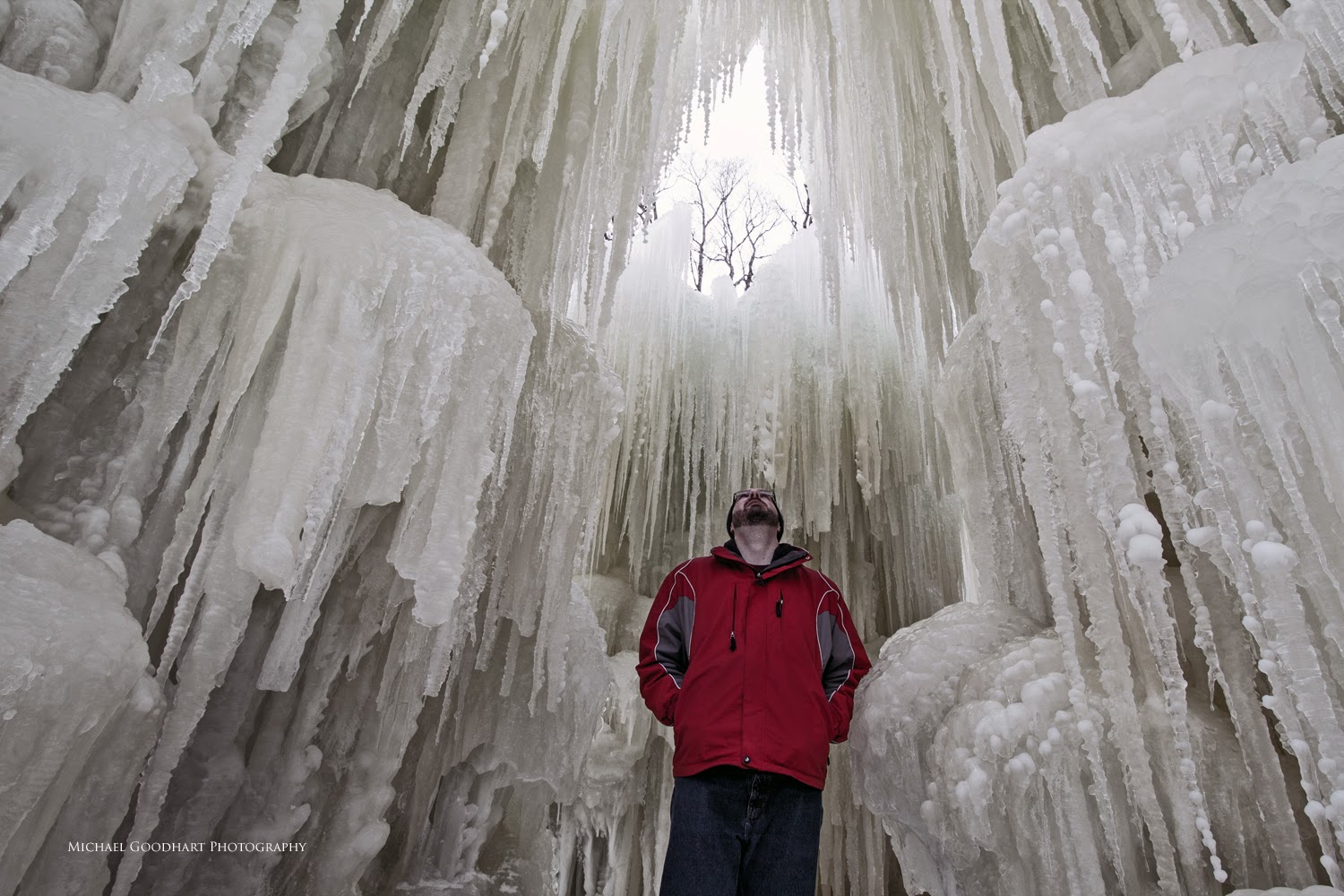
Every artist needs inspiration to fuel their passion. It's easy for a photographer to find inspiration in their daily routines. But you need something that completely breaks from your routine to kick-start new perspectives and ways to grow as an artist. So in late January, I chose the state of Vermont as an expansive base from which to leap toward a photography adventure. This seems like the right time to begin to use this blog to share my journeys with you -- to give you insight into the stories of my work.
I've selected a few photographs to highlight within this blog posting -- though they may not necessarily represent the very best of my work, they do a great job capturing my personal feelings and thoughts of various moments. I've also set up a
Google+ album that encompasses all of my favorite photographs from this trip, if you want to go beyond the highlights of this blog. I encourage you to look through them!
So... let's begin, shall we?
The first thing I wanted to do was visit the
Ice Castles in the Sun Bowl of the Stratton Mountain Ski Area. There are currently four ice castles in the United States, though the number changes from year to year. They're all man-made through an array of pipes spraying water over the course of time, and the result is the creation of these visual masterpieces of icicles. It's a small playground for the child soul within us. I arrived about an hour before sunset to get the best of both worlds of day and night.
As the sky darkened, colorful lights turned on and set the ice-scape aglow. It's a sight to behold.
One structure was set up like a fountain, as water bubbled to the top as a geyser might do. Colors shifted from white to yellow to blue to purple to red, repeating a simple, hypnotizing pattern.
Visiting any of the Ice Castles won't set you back a lot of money -- it was about $14 for an entry ticket for one adult. If you have a DSLR camera and a tripod, make sure you bring them!
During my weekend trip in Vermont, I also wanted to see Quechee Gorge, the deepest of its kind in the entire state. From a bridge overlooking the gorge, it's about a 165 foot drop to the bottom. Unfortunately, on my first full day of this adventure, steady snow showers inhibited a clear view. The trails along the sides of the gorge were also off-limits, as a thick coating of ice made the hilly pathways dangerous... oh, but that didn't stop me. I grabbed my camera bag and tripod, sat at the top of one of the small hills, and let gravity do the work as I slid down! In case you're wondering how I'd get back up, I wasn't really thinking about that -- but thankfully the path eventually reconnected with the road (and I could walk back up that way). The path made its way past an overlook of Mill Pond Falls, well worth the slide down!

The third and final goal for this journey was to get a glimpse of a few of the beautiful covered bridges of Vermont. Covered bridges give us a look through an historical lens, when timber was used in the 18th and 19th centuries to cross the chasms of rivers. It was an engineering marvel during those times. Before this visit, I had no personal recollection of seeing a covered bridge with my own eyes. I tried to hand-pick several bridges of diverse character.
In the quaint New England town of Woodstock, home of three covered bridges, I ventured first to Middle Bridge that spanned across the Ottauquechee River (a river common to many of the bridges I happened to visit). It was the only covered bridge I saw that featured a pedestrian walkway in addition to the vehicle pathway. I vividly recall the overcast skies finally clearing, after I parked my car along the town commons and walked toward the bridge. What a beautiful sight!
A few miles east along Woodstock Road (Route 4) is the Taftsville Covered Bridge, the second longest bridge in the state. Featuring a bright red paint on its outer "skin," it is parallel to the Taftsville river dam (which can be seen along the left edge of this photo below). I utilized HDR (high dynamic range imagery) photography to fuse together three photographs to get the detail in the extreme shadows and light, and I was really pleased with the results after some creative processing.
I used the same method to show a closer glimpse of the details of the timber truss structures inside the bridge. The design, especially considering it came about in 1836, was impressive in its complexity and beauty!
An hour's drive northwest brought me to Cooley Bridge in Pittsford, Vermont. It felt like the perfect archetype of a New England covered bridge, intimate in size yet immense in charm. In that golden hour before the sun dips below the horizon, bright beams of light peeked through one end of the bridge and shimmered across the road on the other side. Looking at the scene, I imagined that if something like heaven exists, this is the bridge that would get you there.
By the way, I adore sunsets -- particularly when partly cloudy skies reflect an eclectic, vivid splendor of color. Along Stevens Road in Pittsford, I stopped my vehicle to witness a wide open stretch of open snow-covered land and stunning shades of red and purple lighting up the mountains on the horizon. These are the moments that you can't help but savor.
During my two-night stay in Vermont, I called the
Hotel Coolidge in White River Junction my temporary home away from home. It was built first in 1849 and rebuilt in 1869 along a main railway. It was named after President Calvin Coolidge's father, and President Coolidge even stayed at the hotel at one time (by the way, I borrowed this very brief historical synopsis from the hotel's web site). The hotel shows its age but that's to be expected -- it's all part of the experience! I recommend it, but definitely try getting a room facing away from the noisy, local bar -- learn from my lesson!
Before I set off to come back home, I drove back to the bridge overlook of Quechee Gorge. Blue skies had opened up again that Sunday morning. Snow banks along the bridge made the photograph difficult, but I took a minor risk and climbed up the bank and leaned along the top of the bridge railing, determined to get that shot. Yes. This was a great way to end this adventure!